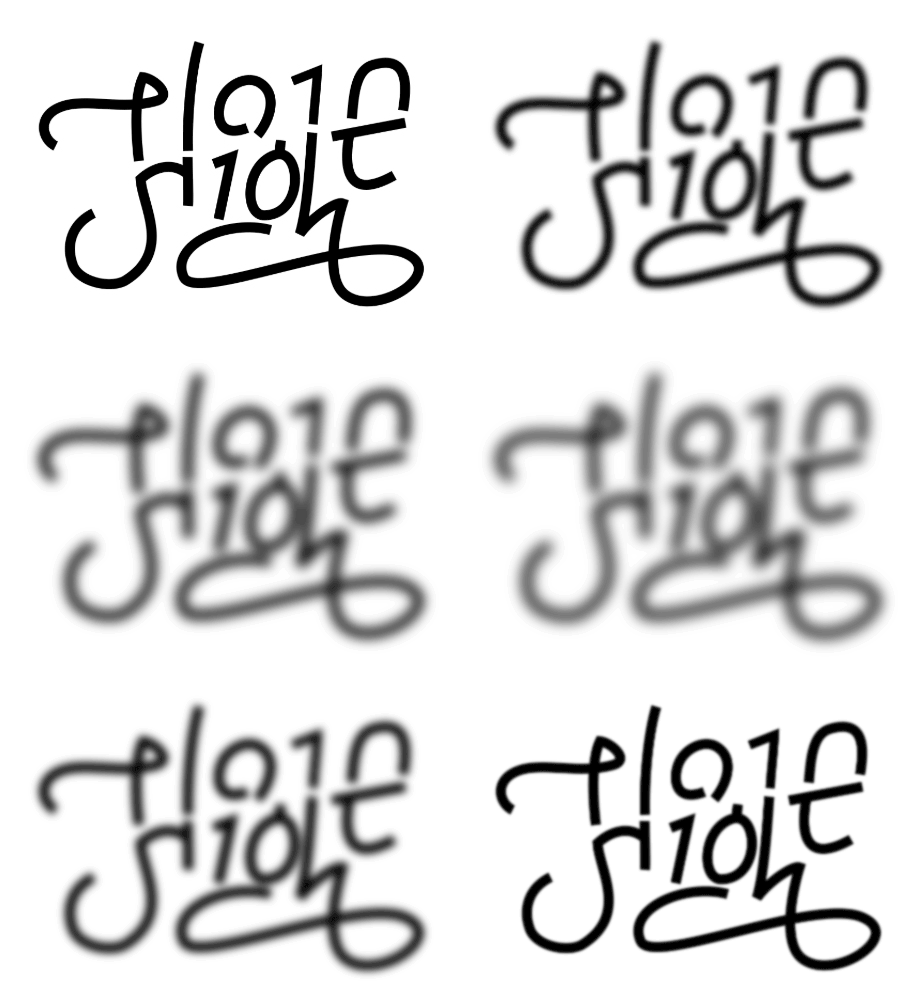
But without further ado, let’s continue our visit in this ambigram museum. Let’s move to the next exhibit and, just because you’re clever, I would love you to try to guess what’s the second reading in the following ambigram. Are you ready?
Let’s go Vassilis!
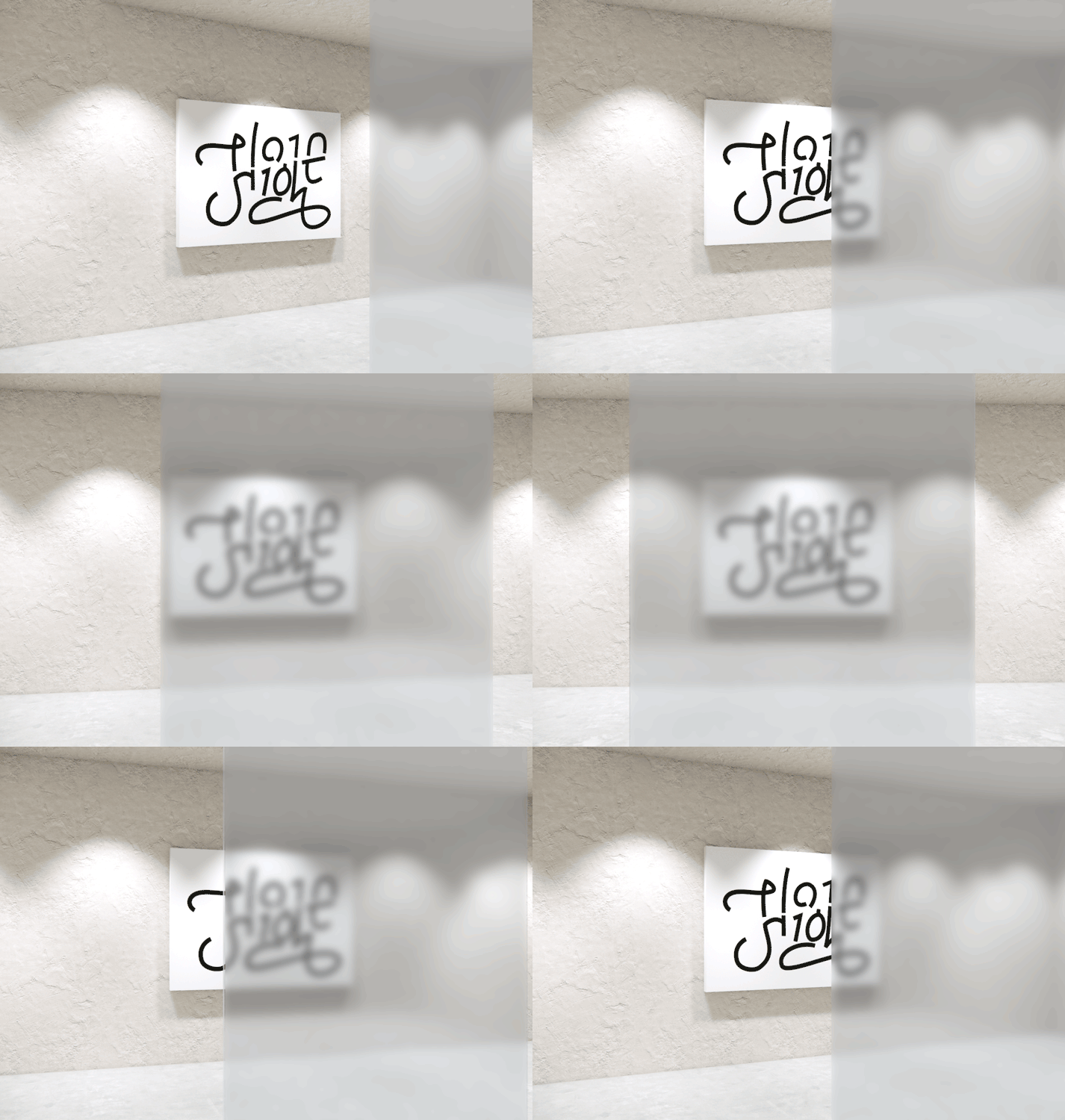
You turn your head and you see this art hanging on the wall. Can you guess what the second reading will be?
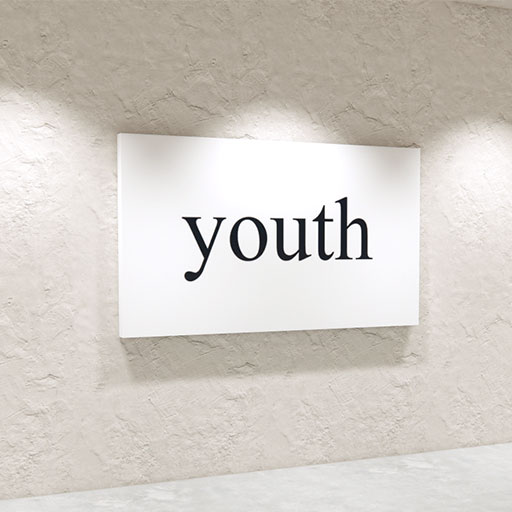
Well, if this gets blurred, then… I don’t know. It will just read ‘youth’ again. I can’t see how a blurred version of it would combine letters to achieve a second read.
Here’s the catch my friend. You are told to follow the marks on the floor and you stand in the right spot, just as the artist intends. What do you read now?
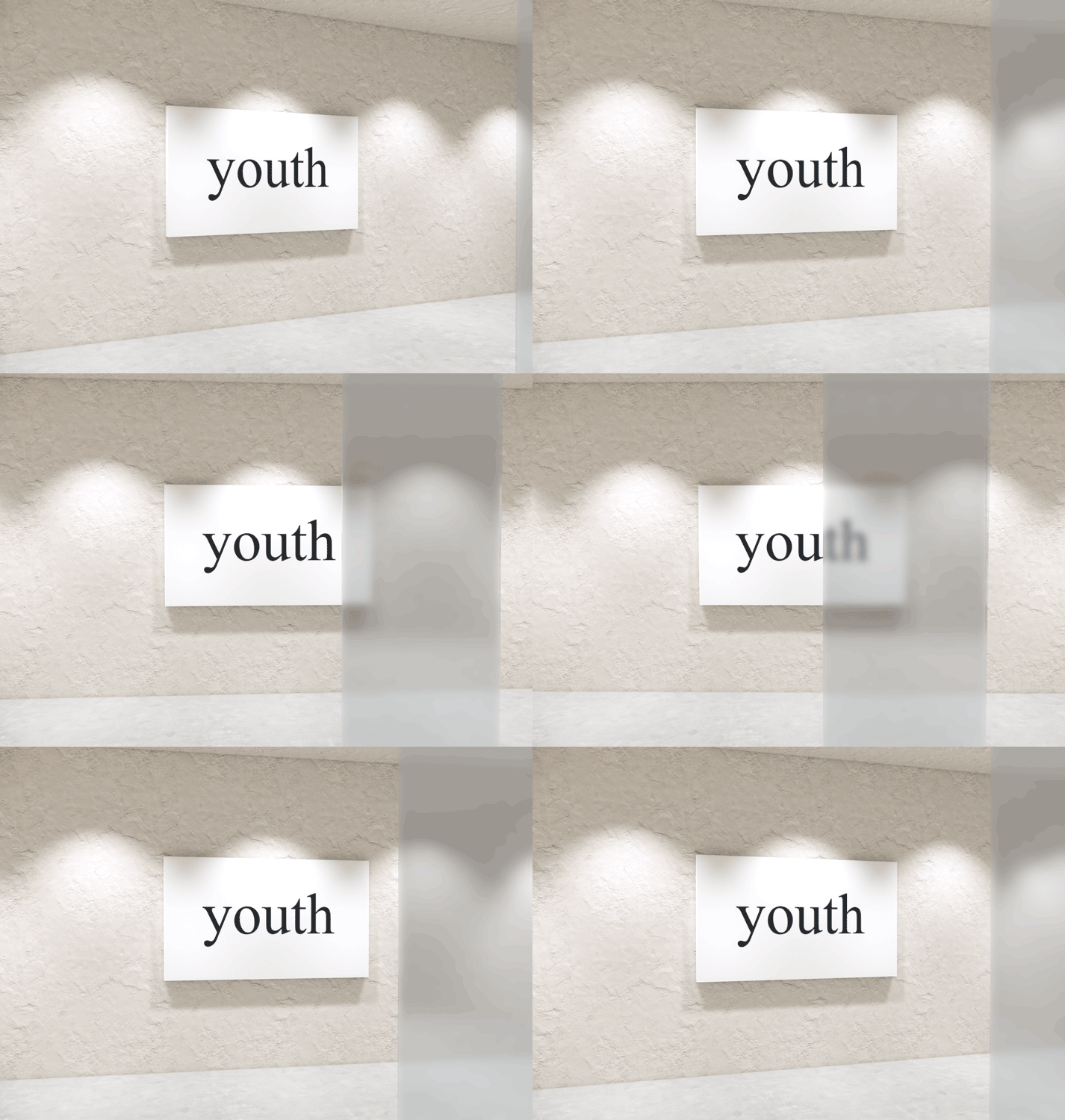
Well… you!
That’s right. The piece is called ‘you are always young’. It’s because no matter your age, your spirit, your mind, your heart always remain young.
But is it still a filter if it doesn’t get between the viewer and the entire piece?
Who said it has to obscure the while piece? A filter can be anything in between the art and you so that it can lead to a second read.
Good. However, this reminds me of emphasis ambigrams. Isn’t it the same?
You have a great mind, my friend. You’re right. When standing on the right spot, you can read ‘you(th)’. If the artist had put this piece on the wall…
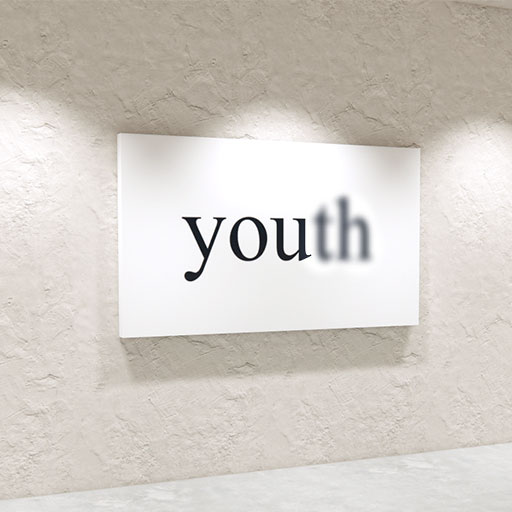
… then yes, this would be an emphasis ambigram. You would read both ‘you’ and ‘youth’ no matter where you stand. Actually, everybody in this room would get those two readings. But just a second ago, you could only read ‘youth’, remember? You only read ‘you’ when you walked behind that blurry glass, standing in a specific place. Without the filter being in the right place between the typographic piece and you, the second reading is impossible.
So, does this mean that we can recreate emphasis ambigrams, or mind ambigrams in general, just by using filters?
That’s something that we’ll explore in the future. But now that you know that a filter can affect just part of the piece, let’s see if you figure out how the next filter ambigram works. What would the second read possibly be and how would it work?
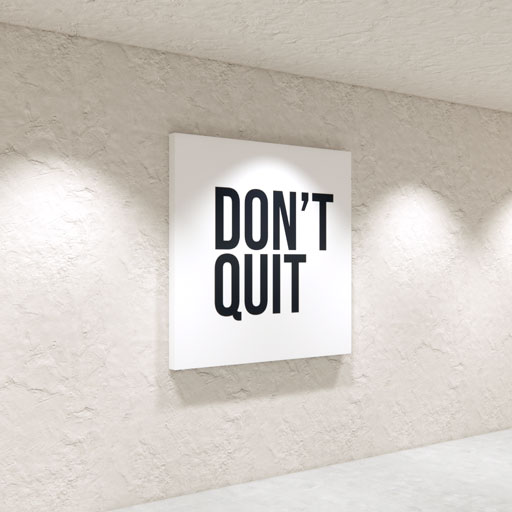
Easy peasy. This will be a checkerboard style of frosted glass that will blur top-right and bottom-left parts off it and I will read ‘do it’.
Hm… you’re almost right, but not exactly. Here’s what happens when you stand on the right spot.
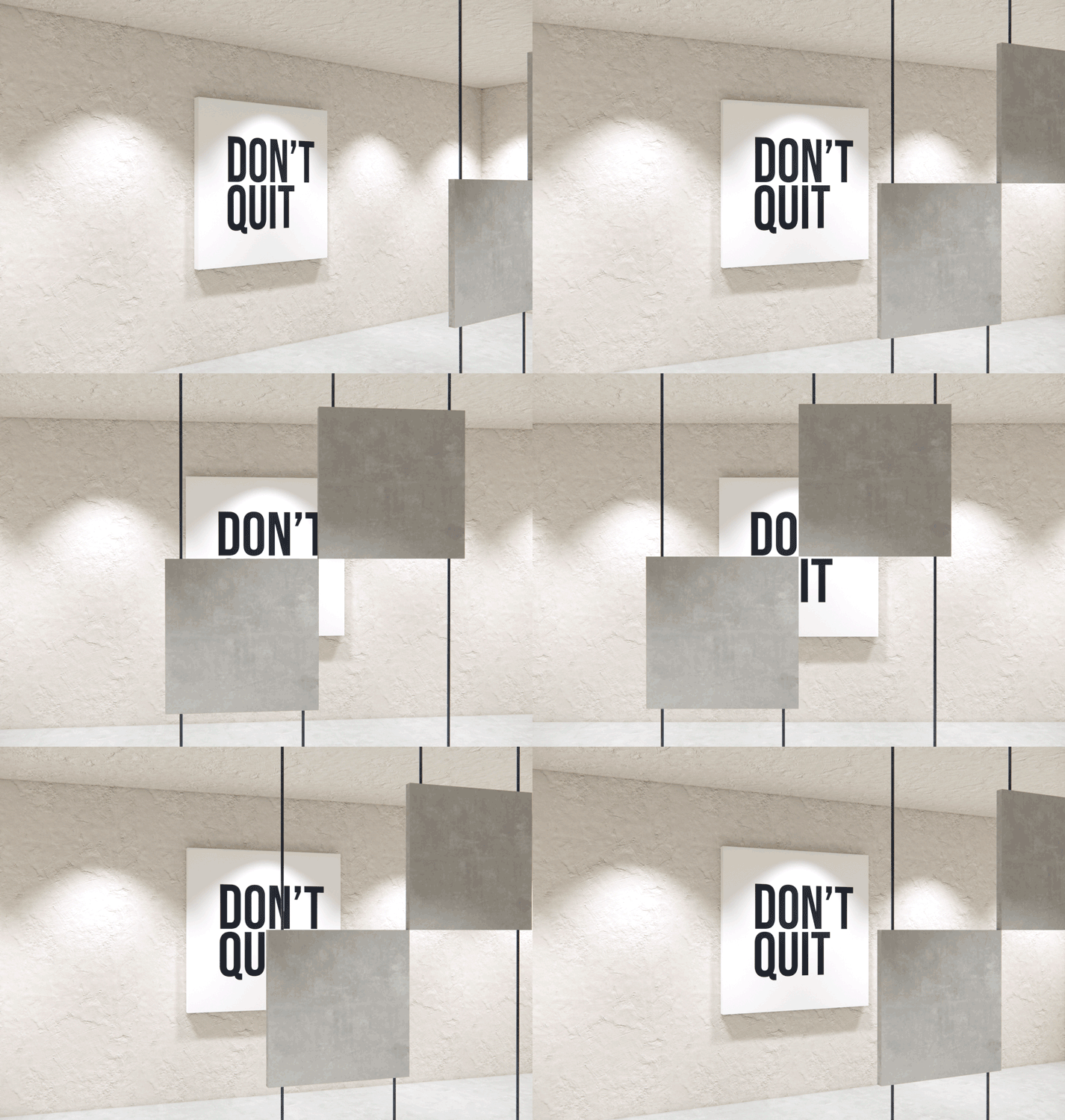
Wow! There’s something that completely blocks my view!
You got the ‘do it’ part though, my friend. Yes. And guess what! That’s a new type of filter ambigrams! It’s called a subtractive filter ambigram.
So, we get a subtractive filter when something blocks a part of the image?
Correct! This type of filter ambigrams blocks your view in a specific part of the image and leaves the rest of it to be read just by itself.
Can you show me another example?
Of course. Here’s the piece ‘you are always young’ we saw before, but now it’s a subtractive filter ambigram.
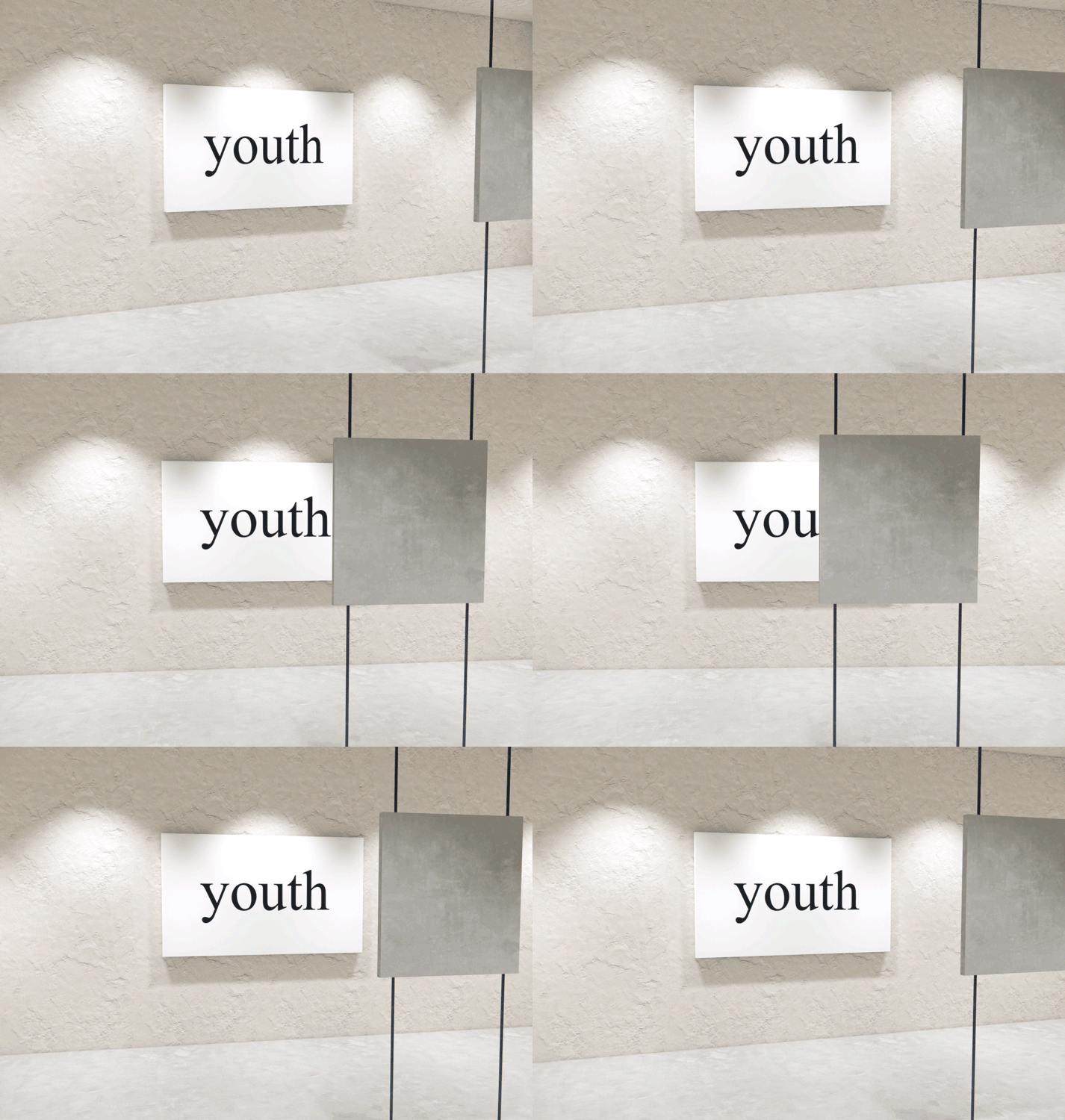
So, what type of ambigram is you-youth? A blur one or a subtractive one?
This is a nice question. The first one that we saw is a blur filter ambigram. The latter one is a subtractive filter ambigram.
But, isn’t it the same effect?
Well yes, but actually no. Using a single filter, we can achieve a lot of effects. Remember Otto’s piece? He uses the blur to ‘connect’ the letters in a sense. Then, in you-youth, we used a blur filter to ‘hide’ some letters. These are two totally different effects using just one filter, the blur.
Similarly, we’ll see a subtractive filter do other things than subtracting.
How’s that possible?
You’ll see in the future. But for a moment, let’s admire our filter map so far.