Hey my friend, I made a mistake.
What mistake are you talking about, V?
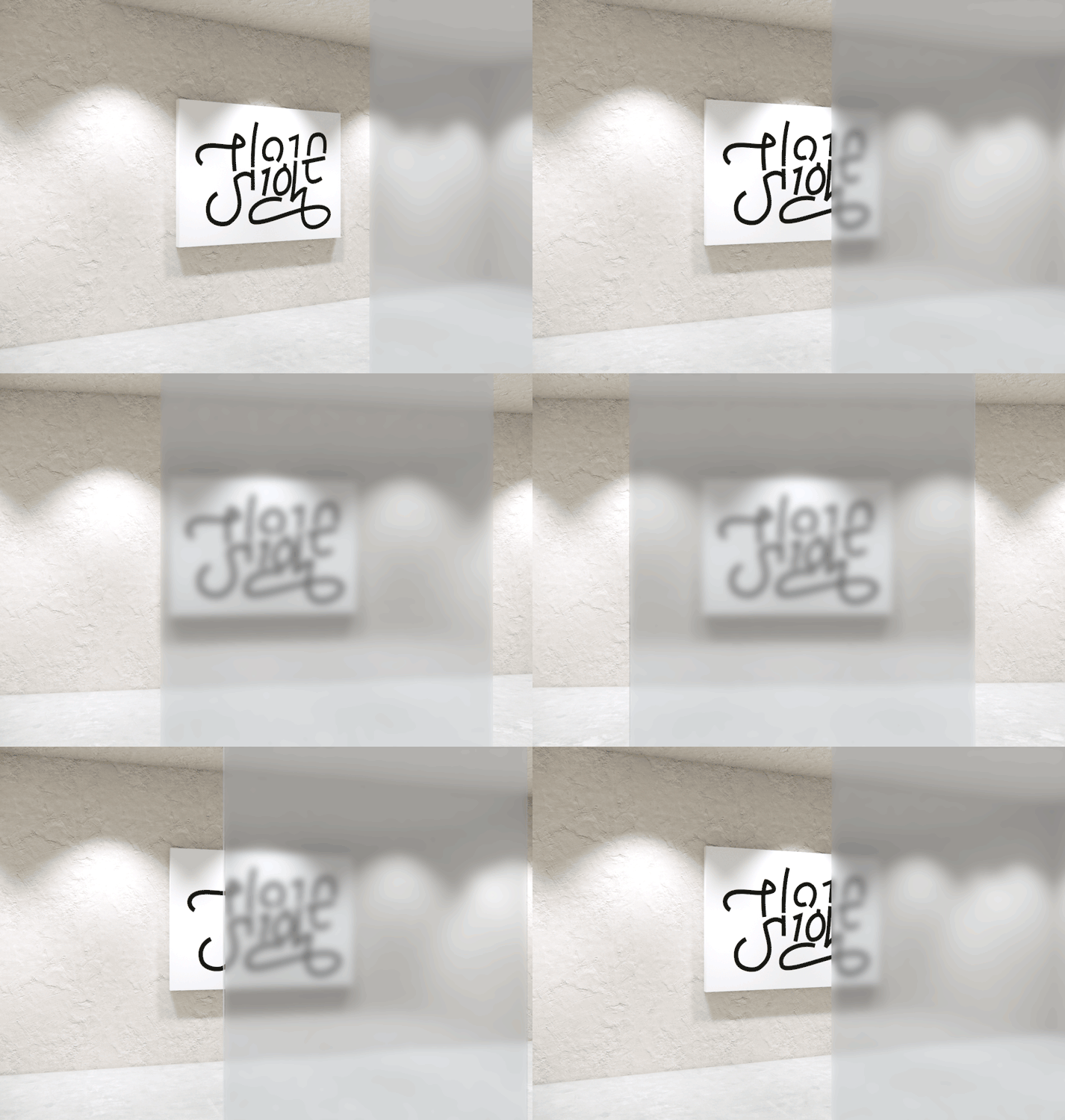
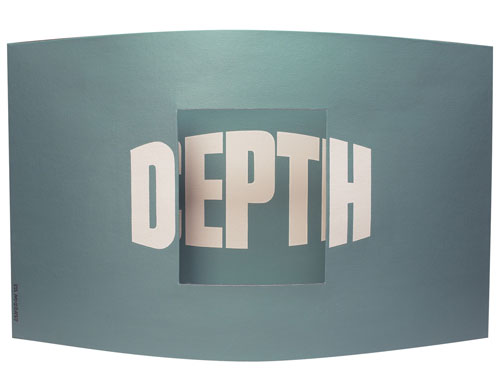
In the previous chapter, we’ve got a look at subtractive filter ambigrams, like this one.

The mistake about this is the naming. Currently, our filter map looks like this.
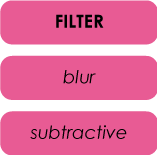
But upon writing this chapter, I realized that there is no cohesion about how I named this type. A more correct way to name this type of ambigram would be solid filter ambigram.
The reason is that in the blur filter ambigram, the name was given describing the filter itself. It’s a blurry filter. Yes, it can blur things, but in Otto’s piece, it also morphed and fused the letters together. If I had named this filter as morphing or fusing filter, it would have also been a mistake, since I would describe the action of the filter and not the filter itself.
Now, going back to the subtractive filter, I described the action and not the filter itself. The filter is a solid piece. It’s something that hides things. Also, it’s something that can remove things from the image behind. Similarly, I could name this type of ambigram as hiding, removing or… subtractive filter, which I did. But I strongly believe that I shall rename it to describe the filter itself, which is solid. Therefore, this type of ambigram will now be called a solid filter ambigram.
This study amazes me for many reasons. One of those is that I explore typography pieces of artists around the globe, including yours, – yes yours! – and from time to time I find things that don’t work as expected. Therefore, I have to change my way of viewing them, which forces me to study them from a different perspective or analyze them using new techniques. That’s why I started this entire exploration by saying:
As an ambigram designer, you may think you know ambigrams.
So did I, until I started this journey.
Sometimes, this means renaming things.
Remember when there were reasons that the term perceptual shift is wrong, since it’s vague and it actually is an umbrella term for many mind ambigrams?
The purpose of Ambigram Horizons is to deliver a thorough table of all ambigram types. Who knows? Maybe in the future we’ll see that a 2d table is not efficient to show all types. Maybe it’s 3d. Maybe something else.
The point is that Ambigram Horizons is alive. And that’s cool. Back to the solid ambigrams.